
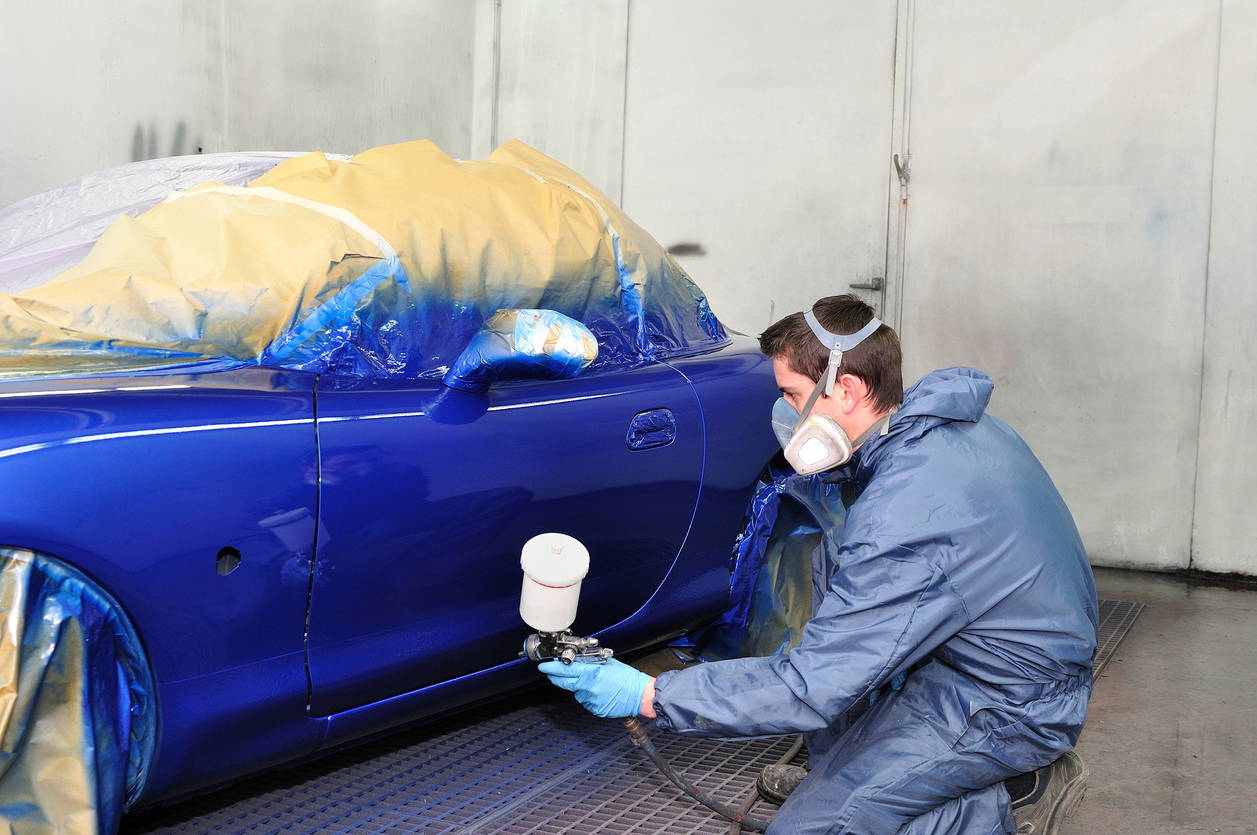
Another name for Volatile Organic Compounds is ‘Solvents’ and they are used in many construction products such as paints, thinners and glues. Examples include toluene, xylene, white spirit, acetone and ethyl acetate. VOCs are also used for cleaning, degreasing, or for dissolving another component (such as paint).
The Control of Substances Hazardous to Health (COSHH) Regulations 2002, says you must protect against the risks from hazardous solvents.
Examples of Volatile Organic Compounds Workplace Exposure Limits (WEL’S):
- Acetone – 1210mg.m 3 long term exposure limit (8hr TWA).
- Toulene – 191mg.m 3 “ “ Can be absorbed through skin
- Benzene – 3.25mg.m 3 “ “ A carcinogen, and can be absorbed through skin
Solvents can make you ill by:
- Breathing vapours – paints etc give off solvent vapours as they dry or cure.
- Skin contact – some solvents can be absorbed through the skin. Repeated or prolonged skin contact with liquid solvents may cause burns or dermatitis.
- Eye contact – contact with liquid solvent and solvent vapour can cause irritation and inflammation.
- Ingestion – you can take solvents into your body on contaminated food, drink and cigarettes.
Different solvents can affect your health in different ways:
- Some of the short-term effects are, irritation of the eyes, lungs and skin, headaches, nausea,
dizziness or light-headedness. Some of these effects may also increase your risk of having an accident. - There can also be long-term effects on your health from repeated exposure to individual solvents. Such as, dermatitis and liver, kidney, neurological diseases. Several solvents such
as benzene are known carcinogens, with the risk of causing anemia, and leukaemia. With even high concentrations causing unconsciousness and death.
Identify and assess:
- Who is using the products that contain solvents? Is there anyone around you who could also be affected? Is there anyone already sensitised that you need to be taking extra precautions for?
- What is the chemical composition of the product? What is the concentration and risk to your workers? (The higher the solvent content, the greater the risk). Check the volatility
characteristics, does it evaporate at room temperature, making it a higher risk in multiple forms? Look at the packaging and safety data sheet to help your risk assessment - How are you carrying out the work, what is the duration and volume you will be using? (I.e. Spraying vs painting have very different effects).
- Where are you using the solvents? How big is the space, is there ventilation present? Is the temperature constant, does it fluctuate, how will this affect the solvents?
Monitoring
Health surveillance
You need to do this if there is a reasonable likelihood of getting dermatitis from your work, or if there are people that are already sensitised and therefore more at risk. Thus, a competent and responsible person must carry out an assessment, including:
- Assess the condition of a new worker’s skin before, they start work and then frequently check for early signs of skin disease after this.
- Keep secure health records of these checks.
- Tell the employer the outcome of these checks and any action needed.
Exposure monitoring
There are different ways of conducting exposure monitoring (e.g. Air Monitoring, Urinalysis) depending on the work and solvents you are using. If you are unsure on what route to take, consult a competent professional like an Occupational Hygienist Consultant, who can assist you on your assessments. This then provides a report that demonstrates the people at risk and by how much compared to the WELs, with suggestions on how this can be controlled.
Control
If everything has been carried out to make the risks as low as reasonably practicable with elimination/reducing the risk, then control measures can then be considered (according to the HSE):
- Ventilation – make sure there is enough fresh air in the work area. Open doors and windows. The higher the risk the more ventilation will be needed
- Respiratory Protective Equipment (RPE) – you may need RPE where ventilation does not provide enough control. The type of RPE depends on the product(s) and work methods you
are using. It is very important to select the correct filter and ensure wearers are fit tested for tight fitting masks. For example, particulate filters provide protection against spray mist but do not protect you from solvent vapours. - Eye protection – wear eye protection (e.g. goggles or a face shield) when doing work where splashes / aerosol may get into the eyes. This must be compatible with any RPE.
- Gloves – gloves should be right for the products you are using, and the duration. Make sure overalls and gloves are compatible, maybe gauntlet type gloves may be more appropriate in this circumstance.
- Overalls – Disposable overalls are preferred.
- Washing – Good washing facilities are essential. Wash off any product on the skin as soon as possible.
- First aid – Give adequate and appropriate first aid treatment to anyone affected by solvents. You may also need to seek further medical attention.